
Liminal Cinema: How Sci-Fi Visualizes Our Collective Uncertainty
How contemporary science fiction is increasingly drawn to liminal spaces—abandoned malls, empty corridors, minimalist environments—that symbolize transitional states and collective unease. Rather than depicting clear dystopias or utopias, today’s sci-fi inhabits the in-between, reflecting modern anxieties around identity, technology, climate change, and societal flux.
Ryan Edwards
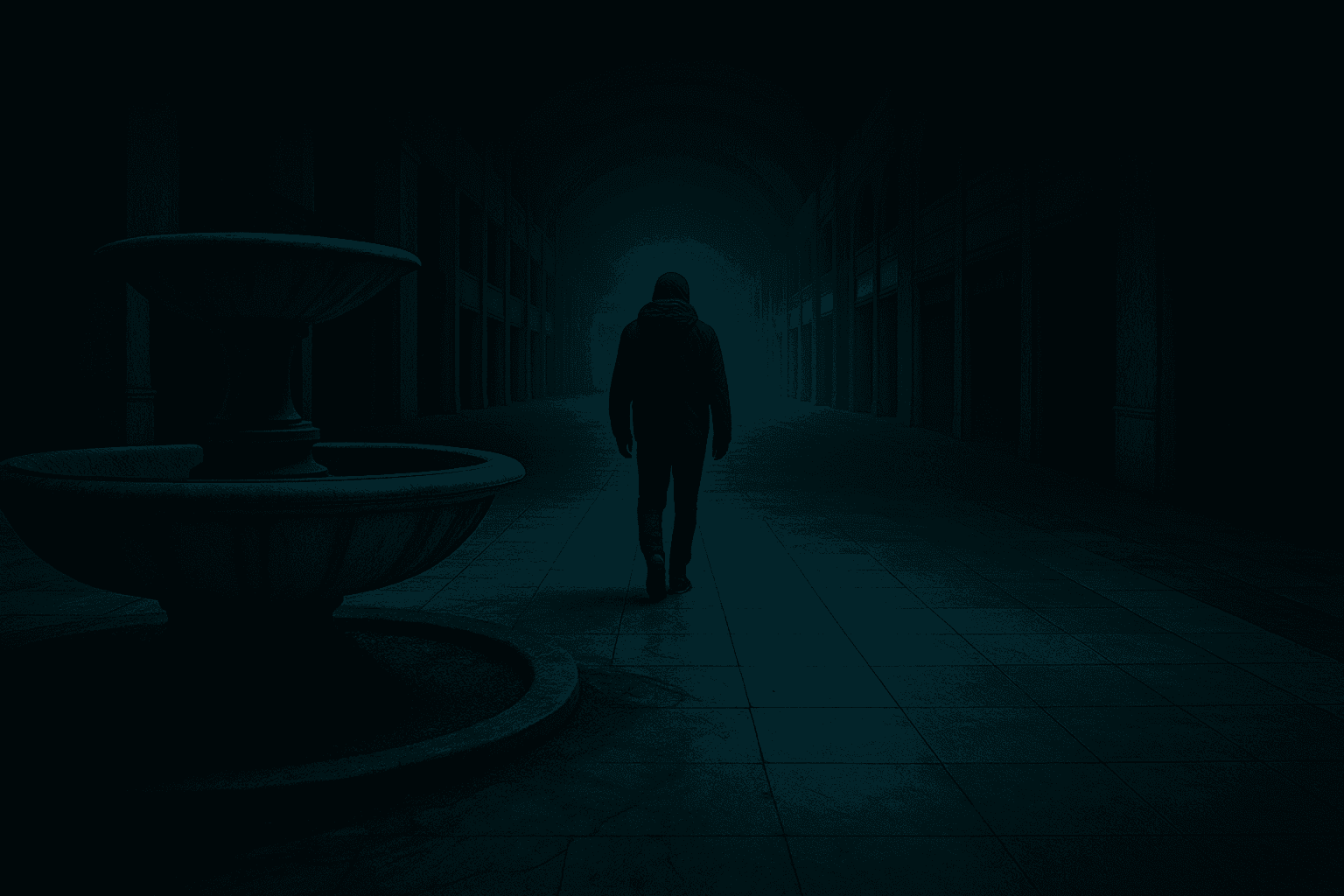
In an abandoned shopping mall where fountains have long dried up, a lone figure traverses the cracked marble floors. This is not just another post-apocalyptic visual trope—it represents a profound fascination with spaces caught between purpose and abandonment that has captured the imagination of contemporary sci-fi creators.
Liminality—the quality of being in transition, at a threshold, neither here nor there—has become the defining aesthetic of science fiction in recent years. From the corporate purgatory of 'Severance' to the reality-bending corridors of 'Everything Everywhere All at Once,' creators are increasingly drawn to settings suspended between states of being. These are not merely stylistic choices but reflections of a collective psyche grappling with unprecedented global transitions.
The resonance of liminal spaces in sci-fi correlates directly with our lived experience. We exist in a perpetual state of in-between: working from home yet never fully disconnected from work; physically present but mentally tethered to digital realms; watching as climate patterns shift while clinging to outdated seasonal expectations. The transitional period has become our permanent state.
We're all living in a kind of waiting room between what was and what will be. Filmmaker Alex Garland, whose work consistently explores transitional states and spaces, exemplifies this. His film 'Men' utilizes the English countryside as a liminal space between urban and wild, modern and ancient, creating an unsettling backdrop for exploring primal fears in contemporary settings.
This shift toward liminality represents more than an aesthetic trend—it signals a fundamental reimagining of how sci-fi functions as cultural commentary. Where classic science fiction often presented clean binaries (utopia/dystopia, human/alien), today's genre works inhabit the gray zones between established concepts.
The visual language of this new sci-fi lexicon draws heavily from internet-age phenomena like the 'liminal spaces' and 'backrooms' aesthetic that first proliferated online. Images of empty malls, abandoned offices with buzzing fluorescent lights, and endless featureless corridors tap into a peculiar nostalgia for places we've visited but never inhabited—spaces designed for transition rather than dwelling.
Director Kogonada's 'After Yang' also exemplifies this approach, setting its exploration of artificial intelligence and memory in minimalist spaces that seem suspended between present and future. The film's quiet corridors and sparsely furnished rooms create a sense of temporal ambiguity that enhances its philosophical questions about human identity.
What makes these liminal narratives particularly potent is their ability to visualize intangible anxieties. Climate uncertainty, technological transformation, and political instability manifest as physical environments caught in transition—deteriorating infrastructure under strange new weather, traditional spaces reimagined through technological interventions, or familiar settings rendered uncanny through subtle distortion.
Audiences respond to these environments because they're experiencing their own form of liminality. The anxiety of being between stable states has become universal.
For creators, these threshold spaces offer unique storytelling opportunities. When characters occupy environments that exist between defined states, traditional narrative rules become more flexible. Time can fold, reality can shift, and psychological boundaries can blur without breaking audience immersion.
As we continue navigating our own fragmented realities, science fiction's embrace of the liminal offers not just escapism but recognition. These stories acknowledge the disorientation of contemporary life while suggesting that transitions, however uncomfortable, contain possibilities. In the spaces between what was and what will be, new ways of seeing and being emerge—making the threshold itself a destination worth exploring.


